‘Leo’s Legends’ 2025
In aiming to celebrate and recognise its many outstanding alumni, the St Leo’s College Alumni Association (SLCAA) announced seven recipients of ‘Leo’s Legend’ status, honouring lifetime professional achievement and/or community contribution.
‘St Leo’s, within the University of Queensland, has been a true ‘home away from home’ for thousands of young men since 1917, and has a very proud, distinguished, and community-minded alumni,’ SLCAA President Mark Pigram said.
“One of the objectives of the association is to better celebrate and recognise the many outstanding achievements of the alumni community.
“This year we are honoured and excited to announce an initial seven recipients of ‘Leo’s Legend’ status.
‘Clearly, there are many outstanding alumni stories still to be told, and each year we will call for nominations for ‘Leo’s Legend’ status, along with Alumnus of the Year and Young Alumnus of the Year awards to be presented at the annual celebration event,’ Mr Pigram said.
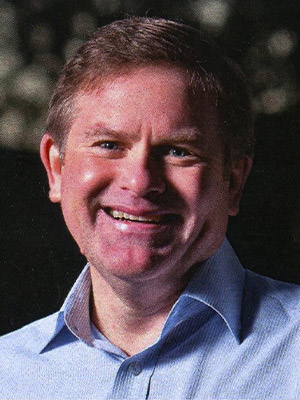
Terry Effeney AO – Energy Industry Leader
(St Leo’s 1979-1982)
Hailing from Rockhampton, Terry Effeney AO studied Engineering and Economics as a proud Leonian and particularly keen cricketer from 1979-82.
Terry went on to spend almost 40 years in the energy industry, combining his engineering and economics background with extensive operational management experience.
At the time of his passing from cancer at the age of 56 in 2018, he was described as one of the Australian energy industry’s greatest contributors.
He was the Chief Executive Officer of Energex for almost a decade from January 2007 and led the merger of government-owned corporations Ergon Energy and Energex to become Energy Queensland.
In a joint statement at the time of his passing, Queensland’s Minister for Transport and Main Roads, Mark Bailey, and Minister for Natural Resources, Mines and Energy, Dr Anthony Lynham, stated that Terry was always fiercely committed to the safety and welfare of Energy Queensland’s 7,500 employees, and in every weather crisis and natural disaster the networks faced, Terry led from the front.
In 2018, Energy Networks Australia Chair, Nino Ficca, conveyed condolences to the Effeney family.
“Terry leaves an important legacy for our industry and a strong mark on future leaders as one who led with a human touch, always making time to engage with those starting in the industry as well as his colleagues across the country.
“Terry had a vision of a smarter and more customer-focused energy system, and he was a passionate advocate for the recent Electricity Networks Transformation Roadmap. His ambition is evident in everything Energy Networks Australia does today,” Mr Ficca said.
Terry was conferred as an Officer of the Order of Australia for distinguished service to the energy supply sector, particularly in Queensland, through planning and delivery programs, to infrastructure management, and to the community.
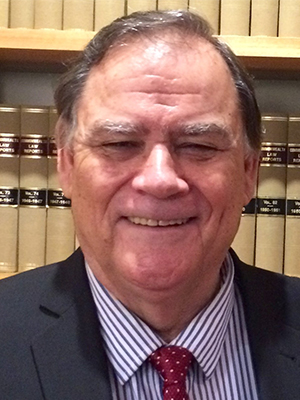
The Honourable Matt Foley – Barrister, Government Minister, Advocate, Social Worker (St Leo’s 1970)
The Honourable Matt Foley is a barrister, former minister and social worker, with a lifetime of service to the people of Queensland.
Upon graduating with a Bachelor of Arts in 1971, Mr Foley held a particular interest in Aboriginal and Torres Strait Islander affairs. He worked for the Aboriginal and Torres Strait Islander Legal Service from 1974-1978.
His advocacy for Indigenous Australians and others facing disadvantage drew him to study law. He was admitted as a Barrister of the Supreme Court of Queensland and the High Court of Australia in 1983, and later to the High Court of New Zealand.
From 1985-87, Mr Foley served as President of the Qld Council for Civil Liberties. In 1989, he was elected as the Member for Yeronga in the Queensland Parliament, where he served until 2004.
Mr Foley served as a Minister in four governments, including as Attorney-General and Arts Minister for the Goss and Beattie governments.
As Arts Minister, Mr Foley was the Minister responsible for establishing the Gallery of Modern Art (GOMA), the Judith Wright Centre of Contemporary Arts, the South Brisbane home of the Queensland Theatre Company including the Bille Brown Studio (now Theatre) and the Playhouse at the Cultural Centre in Southbank. He also introduced the Public Art Policy requiring artwork to be “built in” to the design and construction of new Queensland Government buildings.
Mr Foley is passionate about gender equality and during his time as Attorney-General was responsible for the appointment of many women Justices to the Queensland Supreme Court. During this time, he introduced Queensland’s first legislation on de facto property rights for opposite and same sex couples.
Mr Foley remains committed to his work, regularly delivering lectures to social work students, and continues to offer his professional services to the disadvantaged.
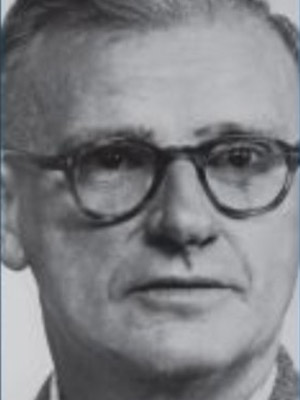
Professor Douglas Gordon AM – Serviceman, Social and Preventive Medicine Pioneer (St Leo’s 1938-42)
Douglas Gordon (1911–1993), physician, medical administrator, and professor of social and preventive medicine, was born in Maryborough.
With punctuations around the time of the Great Depression, a year in the seminary, and circumstances which saw him return to the family farm, Dr Gordon moved to St Leo’s in 1938 and graduated from the newly established UQ School of Medicine in 1942.
In July 1943, he was appointed as a flight lieutenant in the Medical Branch of the Royal Australian Air Force (RAAF) and in 1944 and 1945 he served with No. 14 Airfield Construction Squadron on Morotai, and with No. 2 ACS at Balikpapan, Borneo.
After the war, Dr Gordon joined the Queensland Department of Health and Home Affairs as Director of Industrial Medicine. His duties required him to travel throughout Queensland, inspecting mines, factories, foundries, abattoirs, and farms for health hazards.
Remedial measures, including new government regulations to reduce the incidence of lead poisoning, resulted from his investigations and advice.
In 1957, Dr Gordon became the foundation professor of social and preventive medicine at the University of Queensland. While continuing his teaching, he also served as Dean of Medicine (1962–67).
In 1958, he had founded the university’s student health service and the ‘Douglas Gordon Health Centre’ would later be named (1987) in his honour, acknowledging his concern for the physical and psychological welfare of students.
Professor Gordon developed social medicine as a formal discipline, extending knowledge and skills particularly in bio-statistics and epidemiology. His textbook, ‘Health, Sickness, and Society’ (1976), was widely used in Australia and elsewhere.
Professor Gordon played a prominent role in public health and health care delivery in Australia throughout his career and was admitted as a Member of the Order of Australia in 1979.
His memoir is titled: ‘Diverging pathways, with luck on my side’
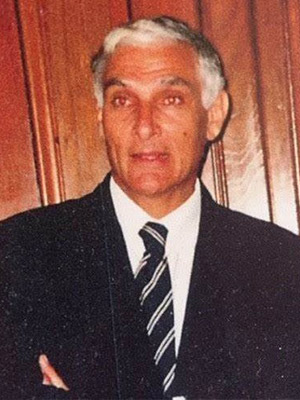
Dr Norman Katter – Distinguished barrister and legal scholar (St Leo’s 1966-1967)
Dr Norman Katter was educated at Mt Carmel College, Charters Towers before moving to St Leo’s in 1966-67 to study law at UQ.
A distinguished barrister with a career spanning over 50 years, Dr Katter is internationally renowned for publications on ‘duty of care’ in tort, including ‘Causation in negligence law: unravelling the difficulties’, the first reference of its kind to focus on issues relating to duty of care in the law of negligence in Australia.
Recognising his significant contribution to the University of Queensland, Dr Katter is a Life Member of the UQ Law Alumni Association, and the UQ Law Society Room within the Law School is named in his honour.
While at St Leo’s, Dr Katter was also an excellent rugby player, gaining ICC selection in 1966 and 67.
Dr Katter served as a member of the St Leo’s College Council in the 1990’s.
Several of his sons and extended family are also esteemed alumni of St Leo’s.
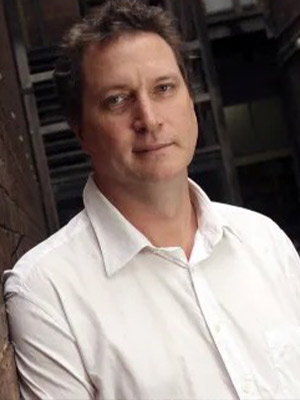
Andrew McGahan – Author and Miles Franklin Award Recipient (St Leo’s 1984-85)
Multi award-winning author Andrew McGahan was part of a long line of outstanding Leonians from a wheat farming family near Dalby when he attended the college to study Arts in 1984-85.
Among Andrew’s best-known works are the novels Praise, Last Drinks, and The White Earth – an epic and gothic tale set in a fictionalized version of the district in which he had grown up. It became a bestseller and won a raft of literary awards including the Miles Franklin Award in 2005.
Andrew died of pancreatic cancer in 2019, aged just 52.
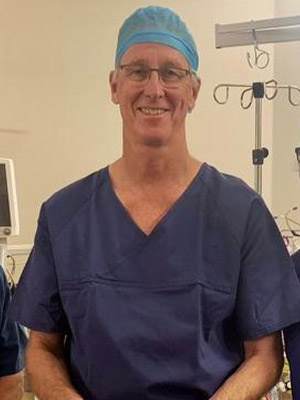
Dr Tim McGahan – Pioneering Vascular Surgeon (St Leo’s 1977-81)
Dr Tim McGahan was a highly respected 61-year-old vascular surgeon when he died of pancreatic cancer on April 20, 2021, just two years after his novelist brother and Leonian Andrew passed away from the same disease.
He was appointed director of the Princess Alexandra Hospital’s vascular surgery unit in 2019. It was in this unit in 1996 that he performed Queensland’s first endovascular repair of an abdominal aortic aneurysm. This procedure was able to be done via a tiny cut in the patient’s groin, rather than a major 40cm incision on the abdomen.
Dr McGahan was well known as an extremely generous colleague, teacher and mentor. His humility, calmness and kindness was his trademark.
Dr McGahan was born and grew up in Dalby. He was resident at St Leo’s from 1977 – 81 and met his wife Robyn, a physiotherapist, who lived at Women’s College, while at St Leo’s.
He is remembered not only for the lives he saved and dedication to his patients, but also as a devoted husband and family man.
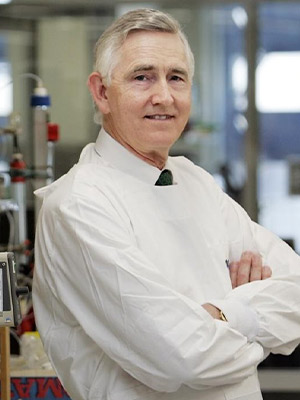
Emeritus Professor Michael Pender AM – Neurologist, Medical Educator, Multiple Sclerosis Researcher (St Leos 1970-74)
Michael Pender was/is a proud Leonian from 1970-74, including as president of the Student Club in 1974. He graduated with First Class Honours in Medicine and a University Medal that same year.
Over the next six years he trained as a physician and neurologist at the Royal Prince Alfred Hospital and St Vincent’s Hospital, Sydney, and became a Fellow of the Royal Australasian College of Physicians (FRACP) in 1981. During this time, he developed a lifelong commitment to researching multiple sclerosis.
In 1989 he was awarded a Doctorate of Medicine from The University of Queensland for his research in the field of multiple sclerosis and was promoted to Reader in Medicine. In 1995 he was promoted to Professor of Medicine (Personal Chair), The University of Queensland, which he held until his retirement in 2021.
In 2006 he was awarded the Multiple Sclerosis Australia Prize for Multiple Sclerosis Research – “For outstanding commitment and dedication to research into the cause and cure of Multiple Sclerosis in Australia”. In 2011 he received the John H Tyrer Prize in Internal Medicine, The University of Queensland, for research in the field of Internal Medicine. He was the Sir Raphael Cilento Orator of the Royal Australasian College of Medical Administrators for 2009 and the W Ian McDonald Lecturer of the Australian and New Zealand Association of Neurologists for 2014.
In 2019 he received the John Studdy Award from Multiple Sclerosis Australia for “lifelong commitment and service to research to identify the cause of and potential cure for Multiple Sclerosis”.
In 2024 Professor Spender was appointed a Member of the Order of Australia for significant service to medicine, particularly neurology and multiple sclerosis research, and to tertiary education.